

I love Ramadan, it’s my favourite time of the year. There’s something unmatched to it, the intricacies of reflection, fasting, prayer and connection.
But this year, fasting didn’t feel the same. There’s been something in the air and I’m not the only one who’s felt it.
Perhaps it’s been the waning motivation to pray. As if Shaytan has been whispering in my ear more than usual trying to cloud my thoughts or dull the sense of peace that normally fills my mind during this holy month. Or maybe it’s the subtle but undeniable changes in my relationships – letting go of old friendships and strengthening new ones. Discovering new people.
So, to my friends reading this and don’t know what Ramadan is, let me explain:
There are 5 pillars of Islam: Shahada (declaration of faith), Namaz/Salah (prayer), Zakat (charity), and Hajj (pilgrimage to Mecca) – fasting during Ramadan is one of them as well.
It begins with the sighting of the new crescent moon and lasts for 29 0r 30 days, depending on the visibility of the moon.
During this month, Muslims are expected to fast from dawn till dusk, which entails abstaining from food and drink – yes, even water.
This year for Sydneysiders, the timeframe of fasting was just over 14 hours, our longest ever.
The act of fasting cultivates self-discipline, empathy for those in need and a deeper connection to God. The month is one of forgiveness and self-reflection. As the sun sets, marking the end of the fast, Muslims are called to prayer by the Adhan, or Azan, before breaking fast and sharing an Iftar meal.
Customary during Ramadan, you break your fast with a date, as the Prophet Muhammed (PBUH) did. I often find myself full after one bite of the date, a testament to the fleeting pleasures of this world.

Carrying a date with me everywhere I go, Source: Sabrine Nasri
Ramadan is a practice that has persevered for over 1400 years, through times of war and peace, famine, enslavement, and colonialism.
It is said that the gates of heaven widen, and the energy is felt within the last 10 nights [of Ramadan], known as LaylatulQadr. ‘With sincere repentance and prayers, sins will be forgiven despite its many layers and the hours of fasting without food or drink will feed the soul and change the way we think.’
LaylatulQadr falls on one of the nights in the last 10 days of the month. This night is known to be “better than a thousand months.” It was during this night that Angel Jibril revealed the Quran to Prophet.
This story always excited me, my dad would tell me that the angels come down and visit us one of these nights. If everything seemed still the next morning, and the trees were bent, as if bowing down, that’s how you knew the previous night was LaylatulQadr.

Auburn Galipoli Mosque, Source:Sabrine Nasri
Back to the reason I’m writing this. Typically, there’s a type of joy or fulfilment that comes from eating after a day of fasting. The joy wasn’t in the room with us this year.
I think things changed two years ago. Collectively, we have been grieving – at least I know I have.
From the gut-wrenching images on my social media of children caught in the crossfire of conflict, to the videos of fathers and brothers struggling to pick up every piece of fallen rubble with their remaining strength , in hopes of finding a loved one under the fallen buildings, this year’s Ramadan has brought with it a sobering reflection of the wider world around me.
There is a continuation of injustice faced by women in girls in Afghanistan, and girls as young as five having their private genital parts mutilated in Somalia.
This feeling in my heart has surpassed devastation and reached a point of hopelessness, I can’t shake it and I can’t help but question the higher power. Despite constant prayers for peace on the tip of my tongue, it seems like there is no change, the suffering globally, intensifies.
16 million people in Sudan are facing food insecurity, there has been conflict in the country that has displaced over 3 million people since April 2023. In Somalia, almost 8 million people are relying on humanitarian aid to survive and in Palestine over 2.5 million people are in dire need of food assistance. One girl is dying every 12 minutes in Somalia due to FGM.
This year I’m reminded of the Uyghurs in China, whose faith continues to be silenced in the holy month. Despite a ‘ceasefire,’ violence has not ceased in Gaza and instead of Muslims breaking fast accompanied with the Adhan, they’re accompanied with the echoes of missiles and airstrikes.
There’s a different type of pain I’ve felt this year that comes with knowing the depth of the world’s crises.

The devastating consequences of Israeli attacks on Palestine, Source: Vox
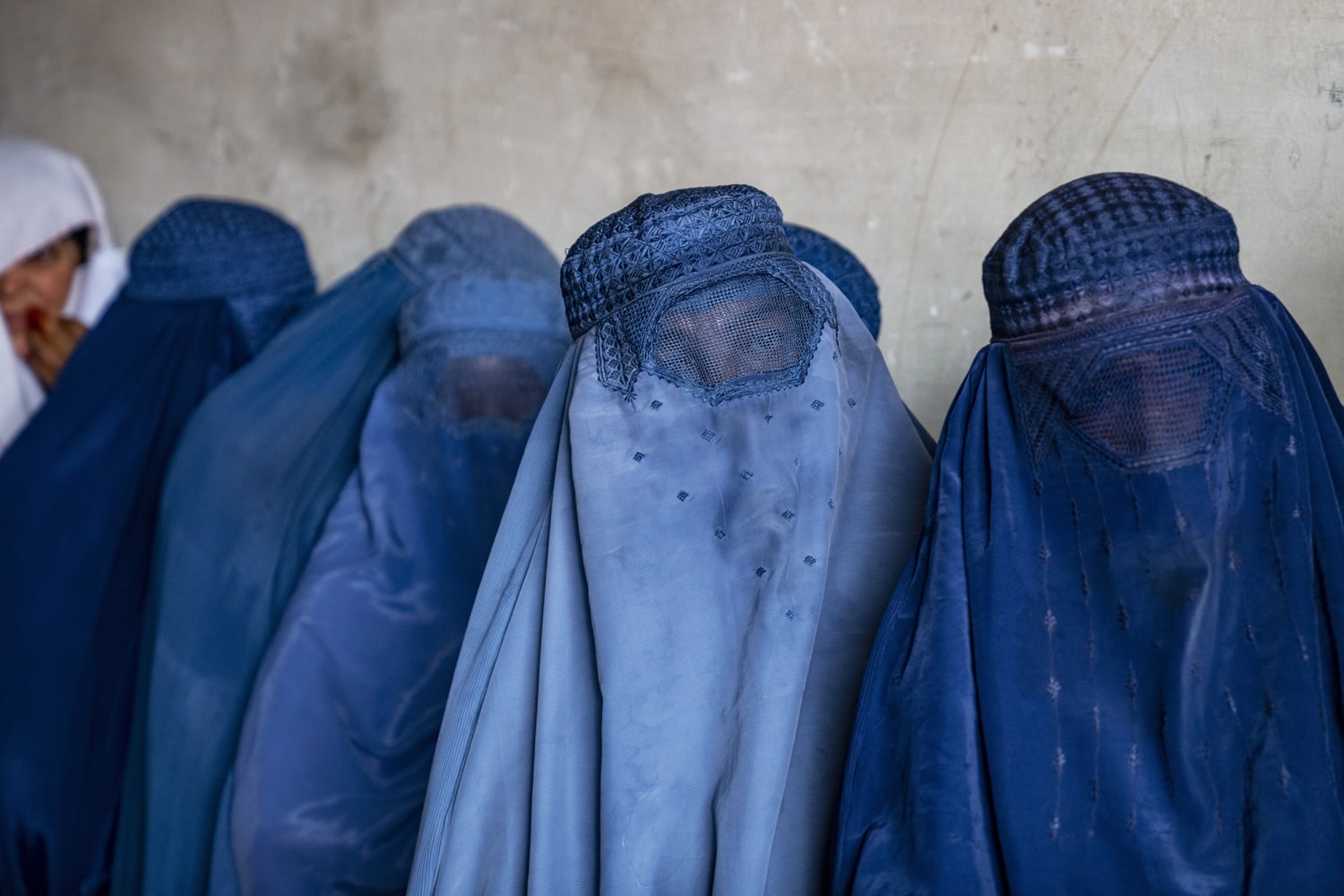
Taliban’s restriction on women, Source: NBC News

Uighur Muslims in China held in concentration camps, Source: Al Jazeera
Five years ago, I would post a photo on my Instagram sharing my iftar for the night, this year I refrained. I paused before doing so and thought it to be insensitive; why should I share this at all when so many people can’t even meet their basic needs?
While we have the comfort of breaking fast in our homes, safe, with the privilege of choosing our Iftar, others can’t. We can enjoy our meals without a second thought, without acknowledging the countless individuals who are struggling to get enough to survive.
Every bite of food, every drop of water and every moment of peace we enjoy is a privilege. With that privilege comes a responsibility to act, to give and to make the world a little better for those who are suffering. Education is key, make yourself aware of what is going on, don’t remain oblivious. Being apolitical is a political choice, the decisions you make and actions you choose to take have a consequence.
For the millions around the world, these are not temporary discomforts but a daily, constant reality, constant suffering. Don’t let silence be your friend. Inform others and yourself and help create even the slightest difference.
In these moments of despair, I’ve found myself returning to a line from the Quran; “Be, and it is.” I cling to this piece of hope and pray for a better Ramadan next year.